Why Jamaican Food in Denver Is Worth Exploring
Denver is not the first American city most people associate with Jamaican cooking. That tends to be part of the appeal. When a food scene develops outside the places people expect, it often grows through persistence rather than trend. It survives because someone missed the flavors they grew up with, because a family recipe mattered enough to build a business around, or because local diners kept coming back once they realized what a properly seasoned plate could do. That is a strong foundation for any cuisine, and it is one reason Jamaican food in Denver deserves serious attention.
A lot of restaurant talk focuses on novelty. Jamaican food does not need that kind of pitch. Its appeal is more grounded. It offers depth from spice, not just heat. It rewards patience through marination, braising, grilling, and slow simmering. It balances comfort and intensity in the same meal. A plate of jerk chicken with rice and peas and cabbage can feel direct and generous, but behind that simplicity sits real technique, a long culinary history, and a clear sense of place.
For diners in Denver, there is another benefit. Exploring Jamaican food here sharpens your sense of what makes a local food scene interesting in the first place. You start noticing the small independent spots, the family-run operations, the places where the menu tells a story of migration and adaptation. You also learn quickly that Jamaican cuisine is wider than the handful of dishes that get the most attention.
The first thing people get wrong is the flavor profile
Many people approach Jamaican food expecting it to be punishingly spicy. Sometimes it is hot, but that is not the whole point, and often not even the main point. Good Jamaican cooking layers flavor in a way that is easy to underestimate if your only reference is a basic takeout version of jerk or curry from somewhere with a broad Caribbean menu.
Scotch bonnet peppers matter, but so do thyme, scallion, allspice, ginger, garlic, onion, and the earthy sweetness that comes from proper browning and slow cooking. Jerk seasoning, for example, is often flattened in the public imagination into “spicy grilled chicken.” Done well, it is aromatic, smoky, savory, a little sweet, and deeply herbal. The heat arrives as part of the whole, not as a stunt.
That balance matters in Denver, where diners are generally open to bold flavors but sometimes encounter international cuisines through filtered versions designed to offend nobody. Jamaican food tends to resist that kind of softening, at least at its best. Even when a restaurant adjusts spice levels for a wider customer base, the backbone of the cuisine still comes through if the cooks care about the details. You can taste whether the marinade had time to work. You can taste whether the curry was built patiently rather than rushed. You can taste when the cabbage on the side was treated as a real component of the plate rather than an afterthought.
Jamaican cooking brings a different kind of comfort food to the city
Denver has no shortage of hearty food. You can find excellent green chile, barbecue, burgers, ramen, pho, birria, and all kinds of cold-weather fare. Jamaican food earns its place in that conversation because it offers comfort in a distinct register.
Take oxtail. In the wrong hands, it can be heavy and one-note. In the right kitchen, it is glossy, rich, and deeply savory, with meat that gives way at the fork and gravy that asks to be spooned over rice. Curry goat, another staple that turns curious first-timers into regulars, carries a different kind of weight. It has warmth from spice and tenderness from slow cooking, but it often tastes brighter and more fragrant than people expect.
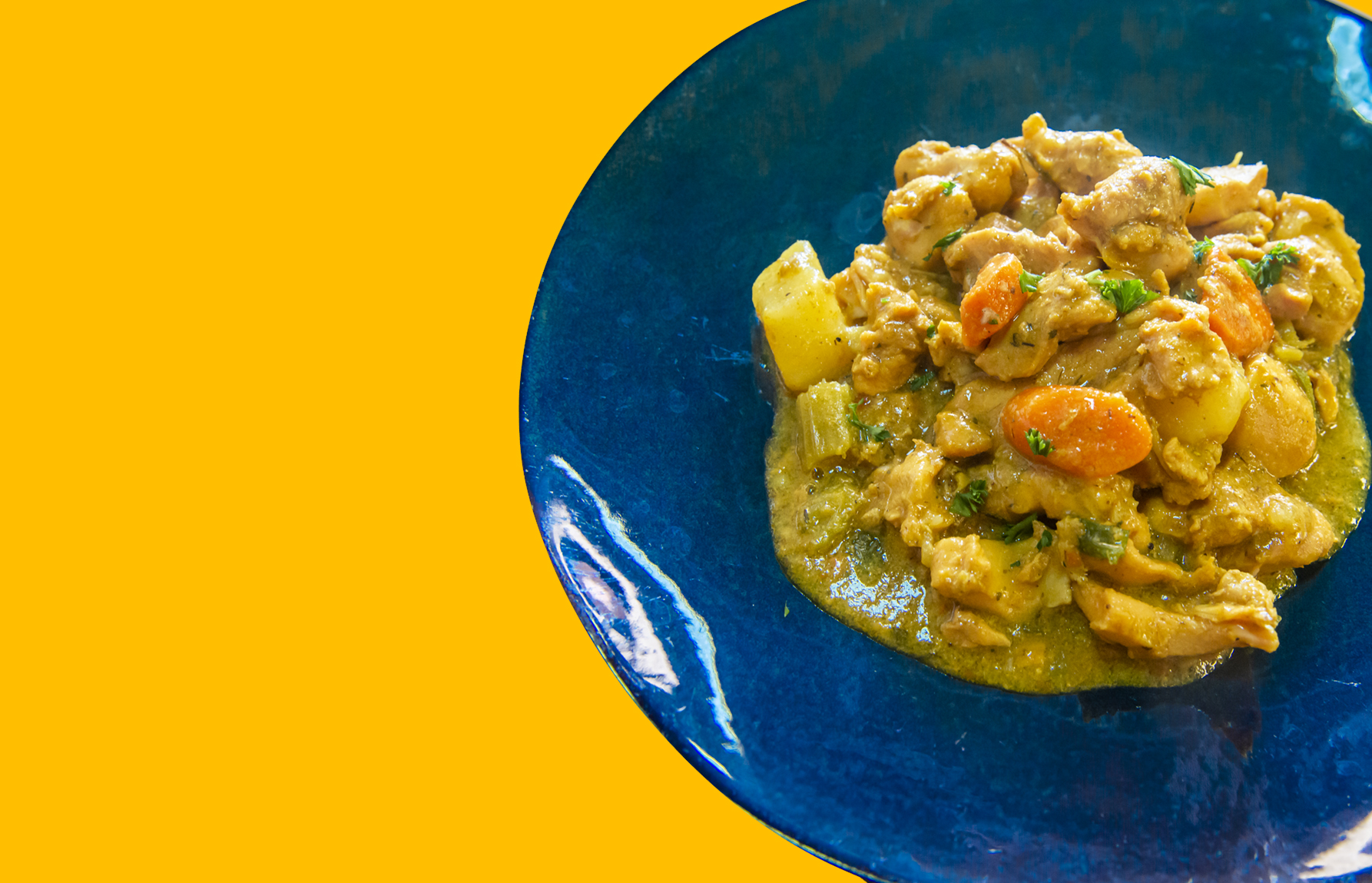
Even a more everyday plate like brown stew chicken can be revelatory if you are used to seeing chicken as a blank protein. The browned skin, the softened vegetables, the gravy with hints of sweetness and spice, the rice catching every drop, it all adds up to something that feels both robust and precise.
This is where Jamaican food in Denver can surprise people. It is satisfying enough for a cold night, but it never needs to rely on sheer richness. The food has structure. Acid, herbs, heat, smoke, and spice keep the plate moving.
Jerk is famous for a reason, but it should not be the end of the conversation
Most people begin with jerk chicken, and that is sensible. It is widely available, easy to understand, and often the dish that first introduces diners to Jamaican flavors. But it also risks narrowing the cuisine to one signature. That would be like judging all Italian food by pizza or all Japanese food by sushi. You would get something true, but not nearly enough.
A good Jamaican menu opens out in several directions. There are stewed dishes that depend on patience, fried snacks and patties that showcase texture, curries that carry traces of South Asian influence filtered through Jamaican seasoning, and sides that do far more than occupy plate space. Rice and peas, for instance, is not a neutral starch. It is fragrant, seasoned, and often central to the meal. Plantains bring sweetness and softness that can round out a spicy main. Festival, when available, offers a lightly sweet fried dough element that can transform a plate from very good to memorable.
That range matters in a city like Denver because diners here often pride themselves on being adventurous, yet many still order the most familiar item when they are trying a cuisine for the first time. There is nothing wrong with starting there. The missed opportunity comes from stopping there.
Denver’s dining culture is especially well suited to Jamaican cuisine
Part of the reason Jamaican food works in Denver has less to do with geography and more to do with temperament. Denver diners are casual but discerning. They tend to appreciate food that feels unfussy yet skillful. They reward restaurants that have a point of view. Jamaican cooking fits that sensibility well.
It also https://maps.app.goo.gl/37JZ7dpqaHRz7t9A9 occupies an appealing middle ground in the local market. On one side, you have fast-casual spots that offer speed and convenience but not much soul. On the other, you have highly conceptual restaurants where storytelling can sometimes overtake satisfaction. Jamaican restaurants, especially the independent ones, often avoid both traps. They can be direct, generous, and deeply personal without feeling self-conscious about it.
There is also something important about the city’s pace. Denver is active, social, and filled with people who like to eat well after work, after a hike, after a show, or during a long weekend afternoon. Jamaican food suits all of those rhythms. It can be a quick lunch if you grab a patty or a small combo, but it can also anchor a slower meal where everyone at the table trades bites of curry, jerk, oxtail, and sides.
The best meals often come from small places with a clear identity
One of the pleasures of seeking out Jamaican food in Denver is that it often leads you away from polished sameness. You are less likely to walk into a giant, committee-designed dining room built around generic “island vibes,” and more likely to find a place where the menu reflects real preference and experience.
That usually shows up first in the details. Maybe the patties have a crust that flakes properly instead of crumbling dry. Maybe the jerk has smoke and char rather than just a wet, spicy sauce. Maybe the curry has enough body to cling to the rice without turning pasty. Maybe the cabbage on the side is tender but still bright, with seasoning that makes it worth finishing rather than ignoring.
Those details are not glamorous, but they are where trust begins. Experienced diners learn to watch how a restaurant handles the supposedly minor parts of the plate. If a kitchen respects the rice, the vegetables, and the sauces, the marquee dishes are usually in good hands too.
In Denver, where restaurant turnover can be brisk and trends come and go, that kind of consistency is worth rewarding. It is also part of what makes exploring lesser-publicized cuisines so satisfying. You are not just hunting for novelty. You are learning where care lives.
Altitude, climate, and local adaptation make the story more interesting
No cuisine arrives unchanged when it settles into a new city. Ingredients differ. Supply chains vary. Customer expectations create pressure. Staff availability, rent, weather, and service style all shape what ends up on the plate. Jamaican restaurants in Denver are no exception, and that is not a flaw. It is part of the story.
Some cooks adapt by adjusting heat levels slightly. Others broaden the menu with items that help unfamiliar diners feel comfortable. Some lean hard into traditional preparations, while others fold in local preferences or practical substitutions when certain ingredients are harder to source consistently. What matters is whether adaptation preserves character rather than sanding it away.
That distinction is important. Every regional food scene contains watered-down versions of something more vivid. But adaptation can also produce smart, durable restaurants that stay true to a cuisine’s core while making it work in a different environment. In Denver, where altitude affects cooking times and moisture behaves differently than it does at sea level, consistency takes attention. So does maintaining quality in smoked meats, braises, and fried items through seasonal swings and service rushes.
When a restaurant manages that well, it deserves credit beyond the usual “hidden gem” label. It is executing a cuisine with technical and cultural demands in a city that poses its own practical challenges.
What to order if you want a real sense of the cuisine
If you are new to Jamaican food, it helps to order with curiosity rather than trying to optimize for familiarity. A common mistake is choosing only the least intimidating dish, then deciding you understand the cuisine. You will get more out of the experience if you build a plate with contrast.
If I were guiding someone through a first meal, I would suggest a spread that includes jerk for smoke and spice, one slow-cooked dish such as oxtail or curry goat for depth, rice and peas as a proper foundation, and at least one side that adds sweetness or brightness. A patty, if available, is worth adding, especially if you are sharing. It is one of the fastest ways to gauge whether a kitchen takes pride in its fundamentals.
Portion sizes tend to be generous at many Jamaican spots, which makes sharing practical. That is another advantage in Denver, where many diners like to sample broadly. One table can cover a lot of ground without turning the meal into a production.
A few signs that a Jamaican restaurant is worth your time
You do not need to overthink it, but a little observation helps. Menus, aromas, and the look of the food tell you a lot before the first bite.
- The jerk should look seasoned and charred, not just coated in red sauce.
- Rice and peas should smell like seasoning, not plain steamed rice.
- Gravy-based dishes should have depth and sheen, not a thin, generic brown sauce.
- The side dishes should feel intentional, especially cabbage, plantains, and patties.
- Regulars ordering a range of dishes is usually a better sign than everyone getting the same combo.
None of these guarantees perfection. They do, however, point you toward kitchens that care about the cuisine rather than just borrowing its most recognizable names.
Jamaican food also offers value in a city where dining out adds up fast
Denver is not an inexpensive place to eat anymore. That makes value more important than ever, and value should be measured by satisfaction, portion, craft, and how likely you are to crave the meal again a few days later. By that standard, Jamaican food often performs well.
Many plates are built to satisfy fully, with protein, starch, vegetables, and sauce all working together. Slow-cooked dishes hold well, which means leftovers can be excellent if you order extra. A container of curry goat or brown stew chicken the next day often tastes even more integrated than it did fresh. That matters for people balancing restaurant budgets with the desire to eat something interesting and substantial.
There is also emotional value in food that tastes singular. Plenty of meals are competent and forgettable. Jamaican food, when done right, leaves a stronger imprint. You remember the perfume of the spices, the soft sweetness of plantains against the salt and heat, the way the rice carried the sauce. That kind of memory is part of why certain neighborhood places build loyal followings without ever needing a giant marketing push.
The cultural importance goes beyond the plate
Food is rarely just food, especially in immigrant and diasporic communities. Restaurants become meeting places, memory keepers, and small public expressions of identity. That can sound lofty, but in practice it often looks simple. A family recipe remains in use. A dining room fills with people who already know what sorrel tastes like. A newcomer tries patties for the first time and ends up asking questions about ingredients, holidays, or cooking methods. A city becomes a little more textured.
That is one reason it matters to support Jamaican restaurants in Denver. Their presence broadens the city’s food culture in a meaningful way. They introduce flavors, yes, but they also preserve traditions and create local familiarity with a cuisine that deserves more than occasional novelty status.
For diners, there is value in meeting food on its own terms. Jamaican cooking is not trying to imitate anyone else. It has a distinct voice shaped by African, Indigenous, European, and Asian influences, with a history that runs through colonization, migration, agriculture, trade, and adaptation. You do not need a lecture with dinner to appreciate that, but knowing there is depth behind the plate can make the experience richer.
It rewards repeat visits more than one-off curiosity
Some cuisines reveal themselves instantly. Others deepen over time. Jamaican food belongs to the second group. Your first meal might be about obvious pleasures: heat, smoke, tenderness, sweetness. On later visits, you start noticing smaller distinctions. One curry is more floral, another more earthy. One jerk preparation leans harder on allspice, another on thyme and scallion. One restaurant’s rice and peas has a firmer texture, another a richer coconut note. These are not trivial differences. They are where preference and understanding begin.
That is another reason Jamaican food in Denver is worth exploring rather than merely trying once. The city’s food scene is stronger when diners develop sustained relationships with cuisines outside their default habits. Repeat visits help restaurants stay open, yes, but they also make you a better eater. You become more attentive. You stop evaluating every meal through the same narrow categories. You learn to recognize craft that does not need flashy presentation to be real.
How to approach the experience with better judgment
There is a practical side to all of this. If you want the best possible introduction, go at a time when the kitchen is not stretched thin but still fully in service rhythm. Ask a question if you are unsure what a dish includes. Be honest about your spice tolerance without assuming spicy means superior. If you are dining with others, share broadly. If there is a house specialty, order it. If the menu includes dishes you do not recognize, that is usually an invitation rather than a warning.
It also helps to avoid imposing the expectations of other cuisines. Jamaican curry is not Indian curry, though there are historical connections. Jerk is not barbecue in the American Southern sense, though smoke and fire matter deeply. Patties are not just turnovers with a tropical label. The more you let the food define itself, the more rewarding the meal tends to be.
Why this corner of Denver’s food scene sticks with people
The best Jamaican meals carry a sense of generosity that is hard to fake. Not generosity as excess, though portions can be substantial. Generosity as conviction. The food knows what it is. It does not need to be translated into trend language or dressed up to earn its place. In a dining culture that sometimes confuses novelty with value, that clarity is refreshing.
Denver benefits from that kind of restaurant ecosystem. A city becomes more interesting when it contains places with strong culinary identities, especially those built through community, memory, and repetition rather than hype. Jamaican restaurants contribute exactly that. They offer spice and smoke, yes, but also patience, structure, and a feeling of being fed by people who care whether the meal lands properly.
If you have not spent much time with Jamaican food in Denver, there is plenty to discover. Start with jerk if you like, but keep going. Try the stew, the curry, the patties, the sides that make the plate whole. Pay attention to the small details. Return to the places that get them right. That is where a city’s real food character often lives, not in the loudest openings, but in the meals people quietly crave again a week later.
Reggae Pot Jamaican Grill
Address: 2243 S Monaco St Pkwy #104, Denver, CO 80222
Phone number: +17204102956
FAQ About Jamaican Food Denver
What is typical Jamaican food?
Typical Jamaican food features bold, vibrant flavors created by blending African, Taino, European, and Asian influences.
What is a famous Jamaican dish?
Ackee and saltfish is Jamaica's national dish, made by sautéing the soft local ackee fruit with salted cod, onions, tomatoes, and spicy Scotch bonnet peppers.
What food is most popular in Jamaica?
The most popular and famous food in Jamaica is Jerk Chicken, celebrated worldwide for its smoky, spicy flavor.